What we teach.Grade by grade.
English language arts, math, science and social studies are taught from Kindergarten, alongside Arabic and Islamic studies.

Standards
The standards behind each subject.
The academic subjects at Huda Academy are taught to published standards, so families can see what their child is expected to learn in each subject and each year.
English and math
From Kindergarten through Grade 5, English language arts and math follow the Common Core State Standards. These set out, grade by grade, what students should be able to read, write and work out by the end of each year.
Reading is taught from Kindergarten through its five parts: phonemic awareness, phonics, fluency, vocabulary and comprehension. Writing and grammar are taught with the 6+1 Traits model, and novel studies begin in Grade 3.
Math is taught with Singapore Math, an approach known for covering fewer topics in more depth. Children move from handling real objects, to drawing the problem, to working with numbers alone, so they understand why a method works before they practice it.
Science
Science follows the Next Generation Science Standards. Students work the way scientists do. They ask questions, plan investigations and explain what they find. We have our own science lab, so experiments are part of the course, and students can take part in the science fair.
Social studies
In the elementary grades, social studies covers four strands: government, economics, geography and history. Current events are brought into lessons too.
Our UALR partnership
We have a partnership with the University of Arkansas at Little Rock (UALR). It includes a teacher resident program, professional development for our teachers, and concurrent enrollment, which lets high school students take college courses.
Classrooms and facilities
Classrooms are equipped with Smart-Boards, and we have a computer lab and a gymnasium, where PE is taught twice a week.
High school
In high school, courses follow the Arkansas Department of Education’s graduation requirements, the same requirements public high schools follow. The Graduation Requirements page explains how that works.
How progress is measured
Teachers follow each student’s progress through the year. They use formative assessments, the quick checks built into everyday lessons, and summative assessments, the tests at the end of a unit. Those results shape what a teacher does next, and they are also how we decide when a student is ready to move ahead.
In the elementary grades, reading progress is measured with the STAR test and the Accelerated Reader program. In math, STAR Math and Accelerated Math check skills every quarter.
The school will confirm
Which standardized test students take now, and in which grades; and whether the result on the school’s website (the 80th percentile or above in reading, language and math, CTB battery) is current and can be published, with the year it comes from.
Subjects by stage
What your child studies, stage by stage.
Every stage keeps the same core of subjects and adds to it as children grow. Kindergarten through Grade 9 attend the full school day, as Arkansas law requires, and faith and academic subjects share the same timetable from the first year.

Kindergarten
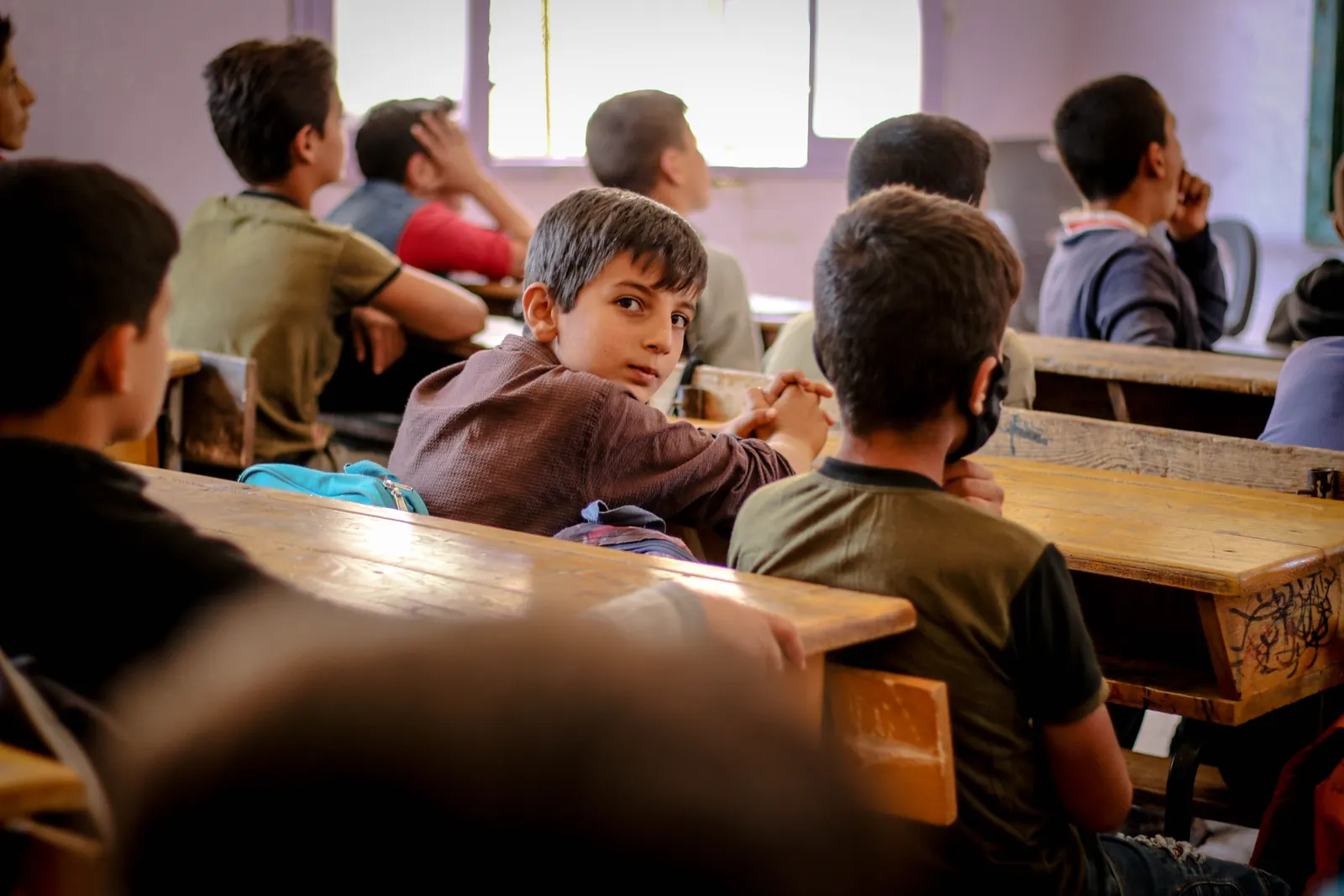
Seven subjects: Islamic studies, Arabic, English language arts, math, science, social studies and PE. Kindergarten is a full day, and classes are kept smaller than public schools can usually offer, so each child gets more of the teacher’s attention.
Grades 1 to 3
The same subjects continue, and salah is added to the timetable as a subject of its own. Grade 1 is also when students begin praying Dhuhr together at school and start Qira’ah, the study of Qur’an recitation.
Grade 4
Computer science joins the timetable, alongside PE, Arabic, Islamic studies, science, social studies, math, salah and English language arts.
Grades 5 to 9
Art is added, making ten subjects: Arabic, Islamic studies, PE, art, math, science, social studies, salah, English language arts and computer science. In these grades, students who are ready can also take advanced courses, described below.
Faith subjects
Islamic studies and Arabic, taught as real subjects.
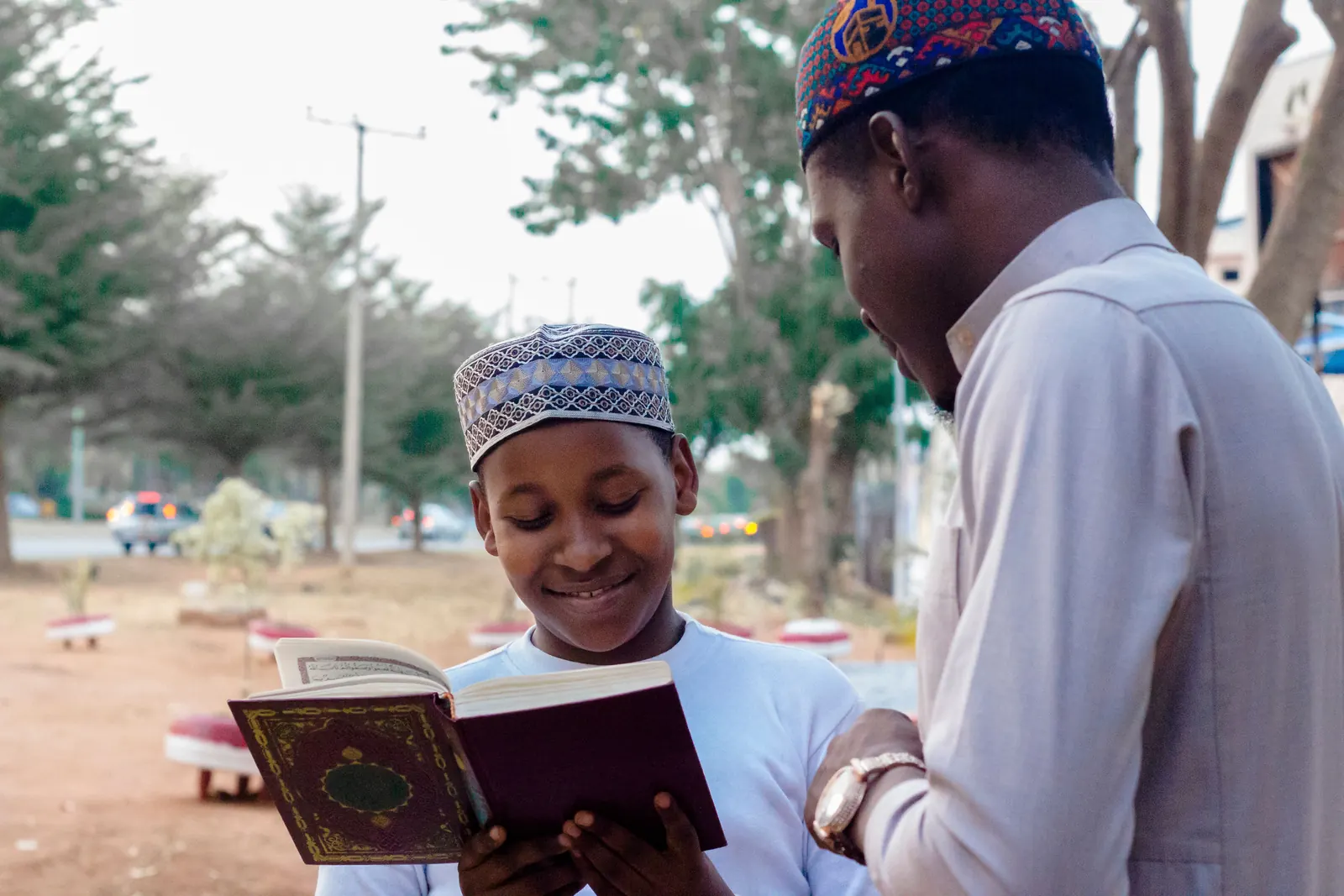 Islamic studies • Arabic • Qur’an
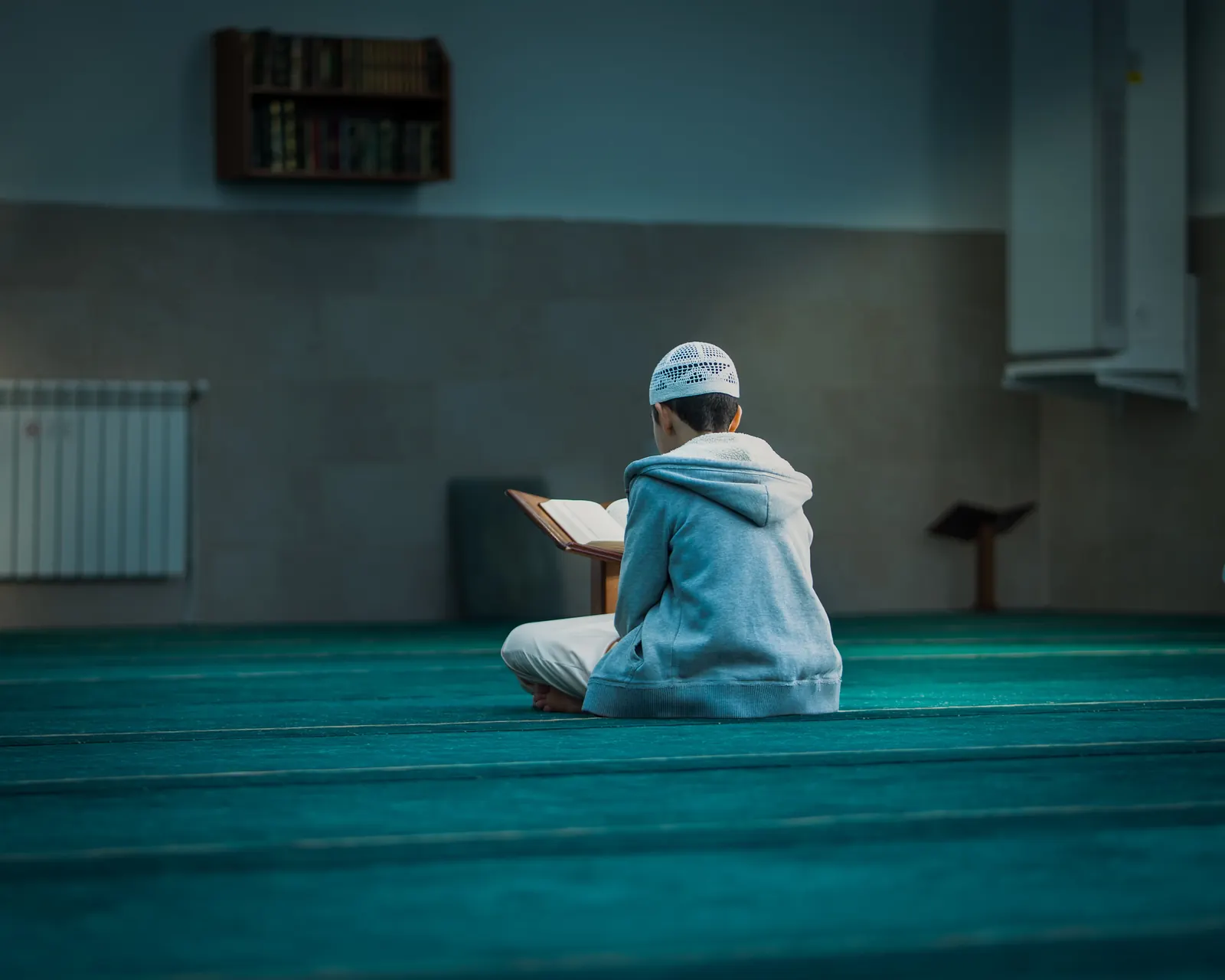
Islamic studies
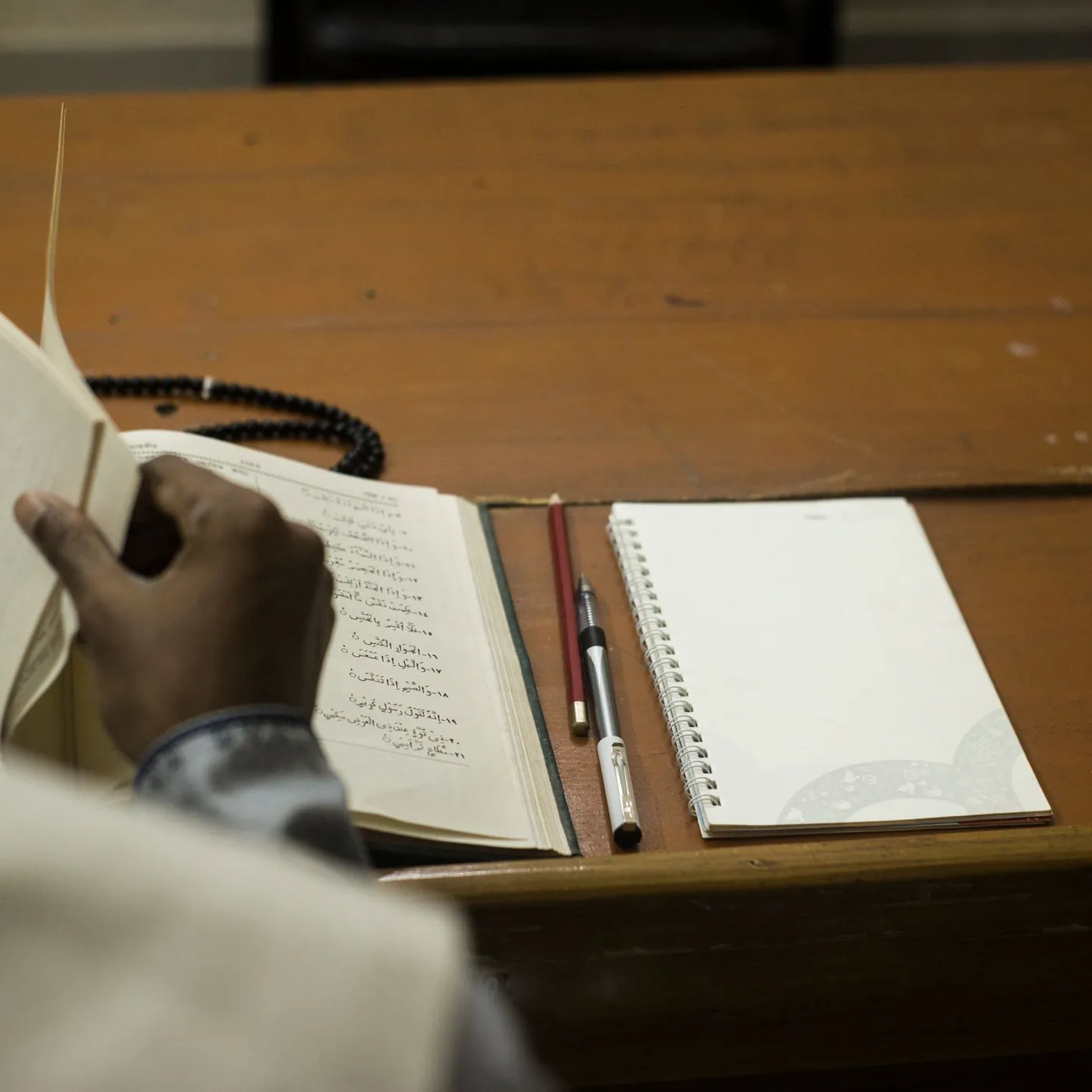
Islamic studies is on the timetable from Kindergarten, taught as a subject with its own curriculum at each stage. We follow a published series that grows with the child: I Love IslamNeeds fixing in elementary school, Learning IslamNeeds fixing in middle school and Living IslamNeeds fixing in high school, where it is joined by the Ijazah program.
In high school, Islamic studies, Qur’an and Arabic are taught four times a weekNeeds fixing, and teachers follow the curriculum we provide.
Arabic
Arabic is taught in two forms. Modern Standard Arabic is taught as a language, for reading, writing and speaking. Qur’anic Arabic is used in the Qur’an and Qira’ah classes, where the aim is to read and recite the Qur’an correctly.
From Grade 3, our Arabic program follows the Bayyinah curriculumNeeds fixing, with the emphasis on understanding the message of the Qur’an. This is where grammar begins. Arabic itself starts earlier, as a full subject from Kindergarten.
Qur’an
Qira’ah begins in Grade 1. Each grade memorizes its own portion of the Qur’an over the year, and the teacher tracks every student’s progress. Eleven people on our staff are huffaz, and our Ijazah program began with Grade 9 in the 2026-27 school year. The Qur’an and Hifz page explains the program in full.
The school will confirm
The exact titles and publisher of the Islamic studies series (the school has given both “Living Islam” and “Living in Islam”); how many hours a week Islamic studies, Qur’an and Arabic are taught at each stage; and whether Bayyinah is still used for grammar from Grade 3.
Advanced courses
Room to move ahead when a student is ready.
Some students are ready for more before the rest of their grade is. In the middle grades, we offer advanced courses so those students keep being stretched instead of waiting.
The advanced courses are pre-algebra, Algebra I, geometry, physical science, world history, world geography and US history. Several of these are courses that many students do not meet until high school, so taking them earlier gives a strong student a head start.
Teachers gather evidence about each student from everyday checks and end-of-unit tests. A student moves into an advanced course when the teacher’s record across the year shows they are ready.


The same record is watched for the opposite reason too. A teacher who sees a student struggling can bring in extra help early, through Response to Intervention. The Learning Support page describes those steps.
In high school, the stretch continues through Pre-AP and AP courses in English, math, science and social studies, and through concurrent enrollment with UALR, where a student can take college courses while still at Huda Academy.
The school will confirm
Which grades can take each advanced course, and whether any of them count toward high school credit.
The standards,
seen up close.



Nothing traded away
Rigor and faith, together.
Families should not have to choose between strong academics and Islamic learning, and here they do not.